

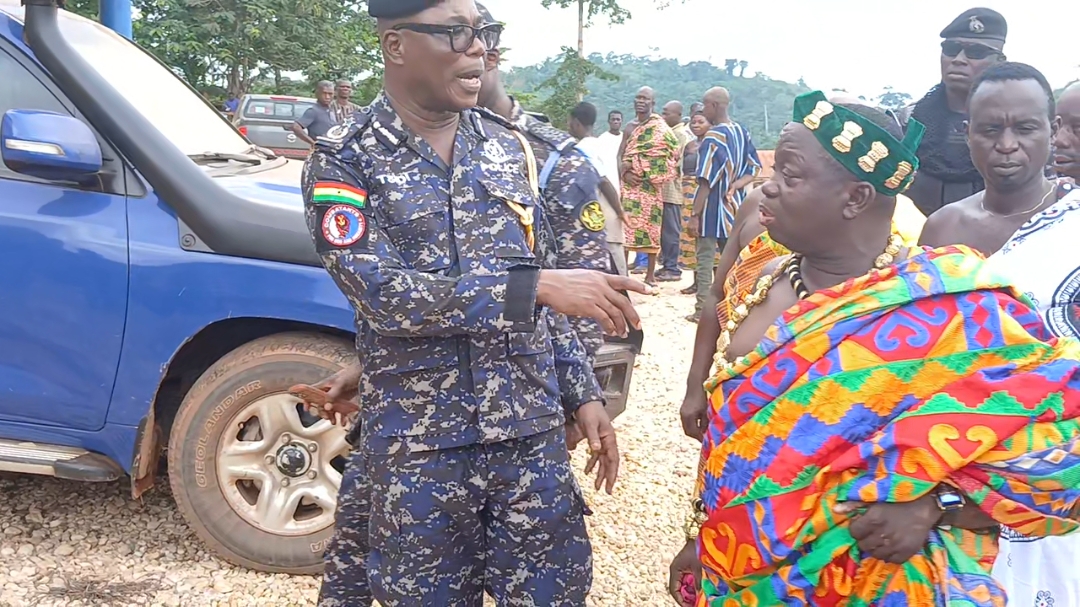
The Western North Regional Police Commander, DCOP Dr. Francis Kwame Tsidi, has visited Enchi Kwahu to inspect a newly constructed police station, fully funded and built by the Kwahu community.During his speech, Dr. Tsidi expressed surprise and admiration for the community’s commitment. “I am very surprised at how the chiefs (Nananom) and the community were able to mobilize limited resources to build a police station.
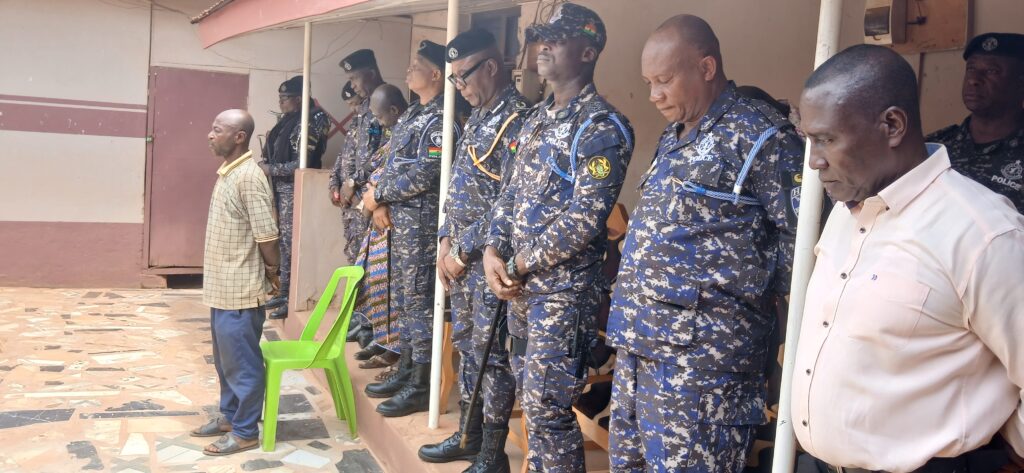
This clearly shows that security is their top priority,” he stated.Dr. Tsidi acknowledged the heavy workload on the Enchi Police Division, noting that the officers often handle multiple responsibilities. He said the division is consistently involved in operations to combat environmental degradation—including the destruction of water bodies and forest reserves—and to prevent various other criminal activities.
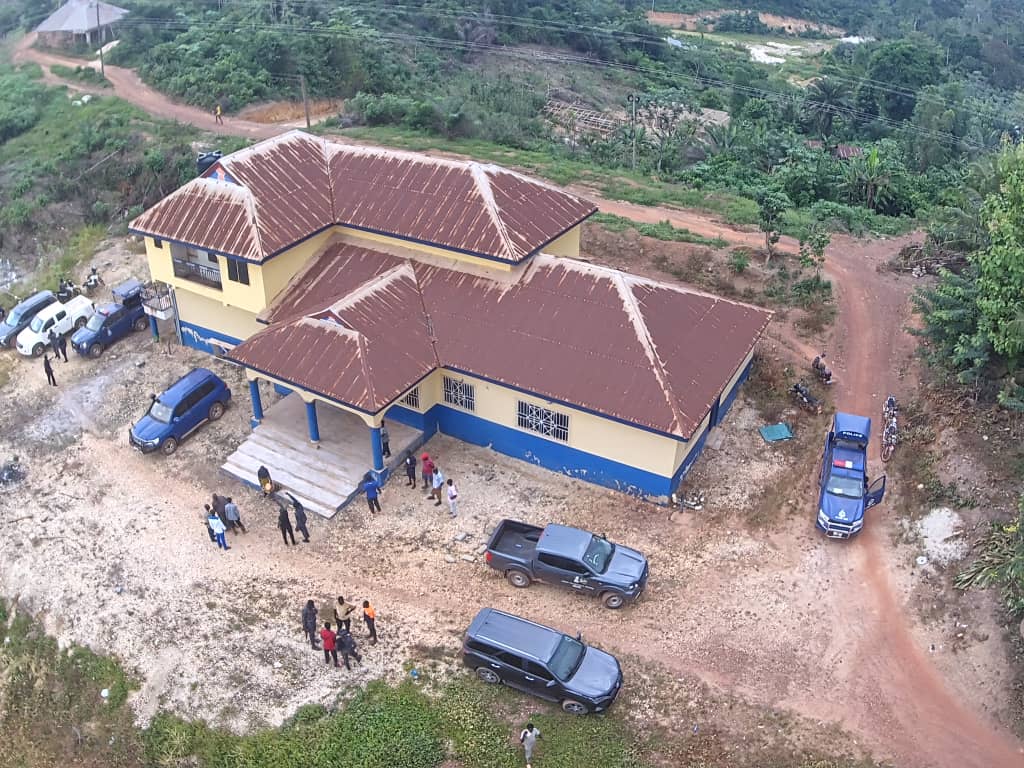
He emphasized that the Police Administration is ready to deploy personnel to the new station. However, his visit was to inspect the building and ensure its readiness. He assured the community that the station would be commissioned soon and fully staffed to serve the area.
Nana Tano Kabaah, Chief of Enchi Kwahu, said the idea to build the police station was rooted in the belief that security is essential for development. “Any community that desires growth must prioritize security. Before investors, banks, or companies set up operations, they evaluate the level of safety. That’s why we made security our number one priority,” he said.
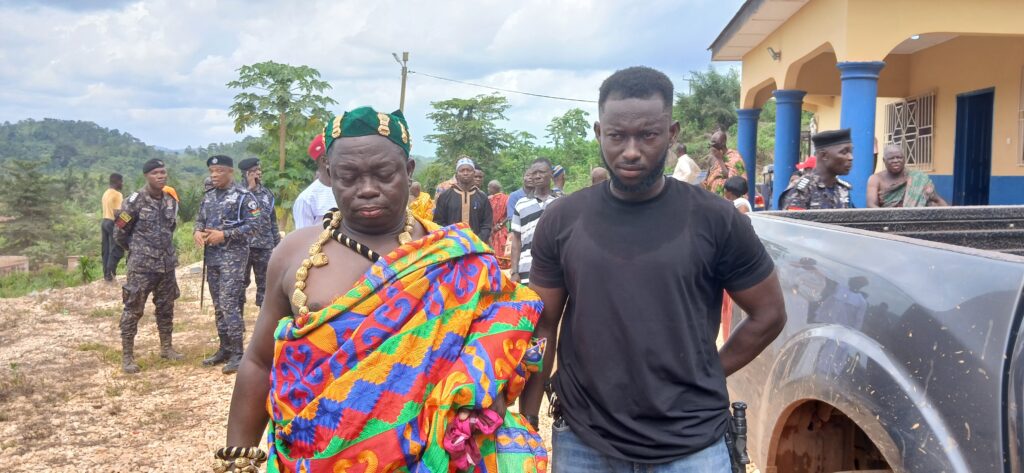
He also revealed that the project initially faced resistance from some youth in the community, influenced by certain elders who believed that having a police station would lead to frequent arrests of young people. “I had to explain and convince the youth to understand the purpose of the project,”
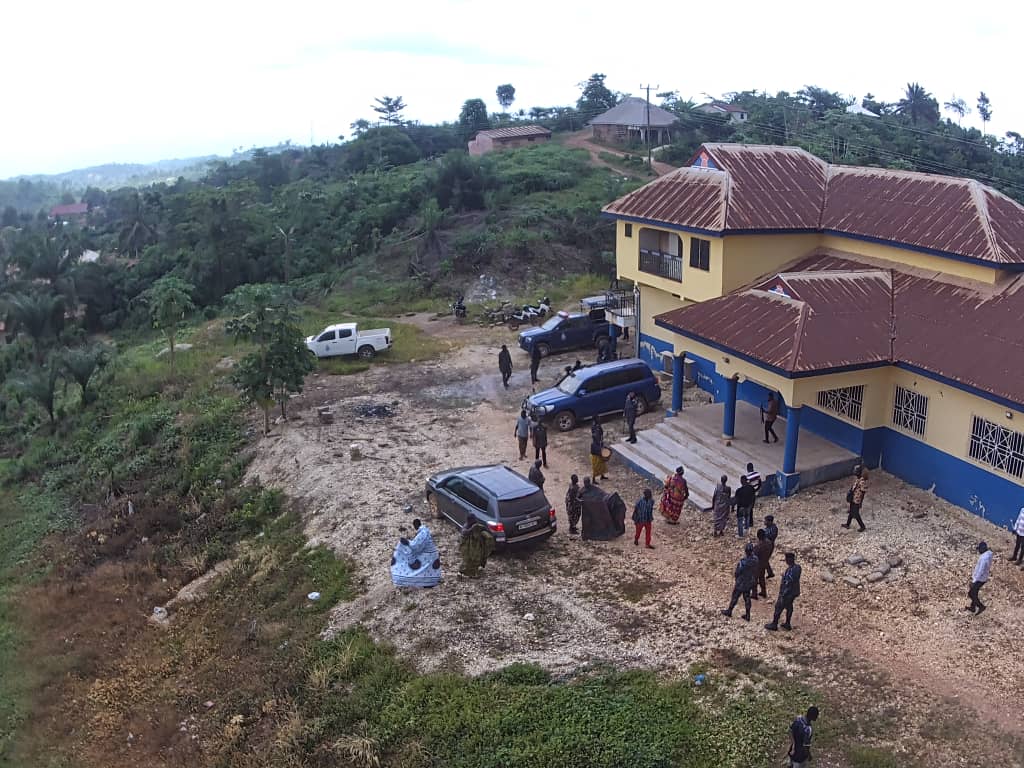
According to the chief, the community spent GH¢1 million to complete the police station. He appealed to the Police Commander to help commission the facility as promised and pledged the community’s full support for the personnel who will be deployed.The new station includes three holding cells for males, females, and juveniles, a CID office, a commander’s office, a charge office, and residential barracks for officers.
By Richard Adjei Kwarnteng.
