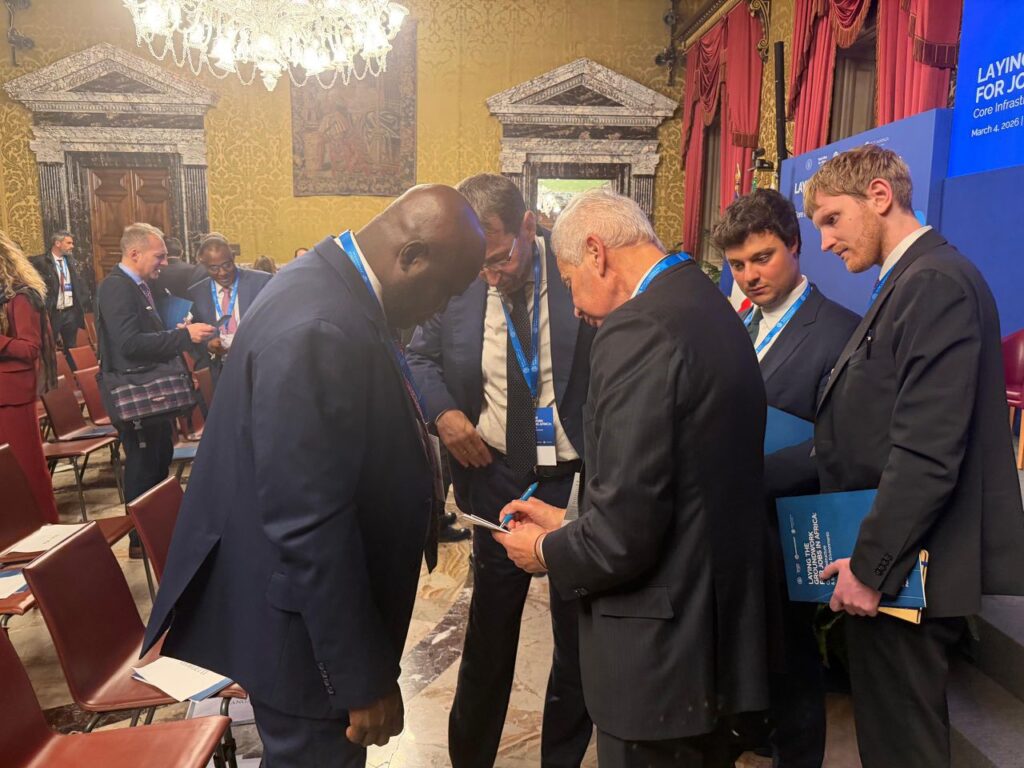

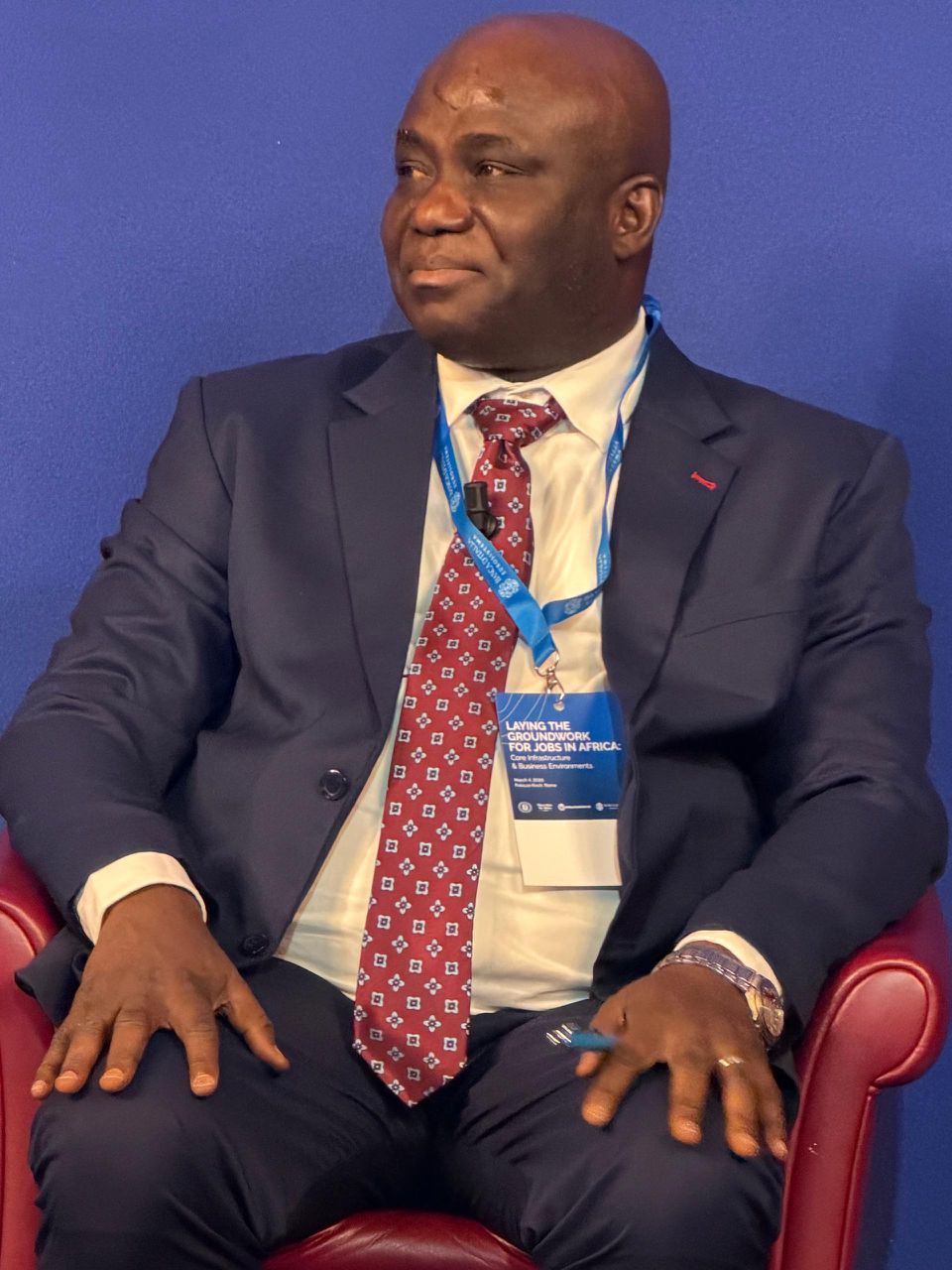
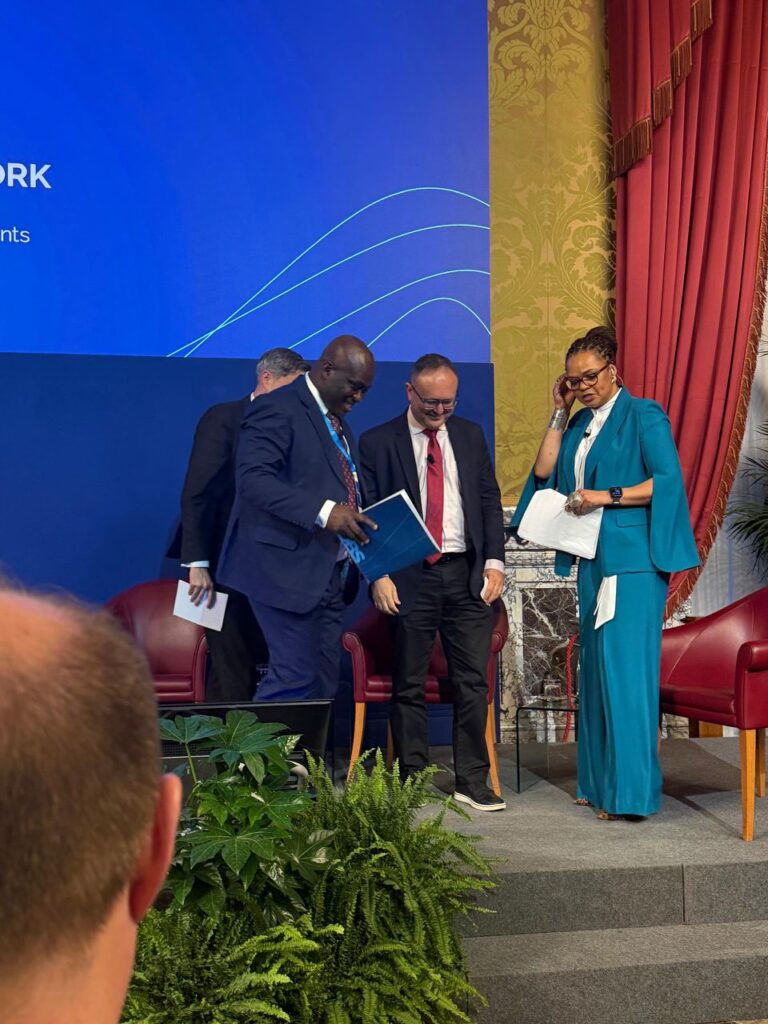
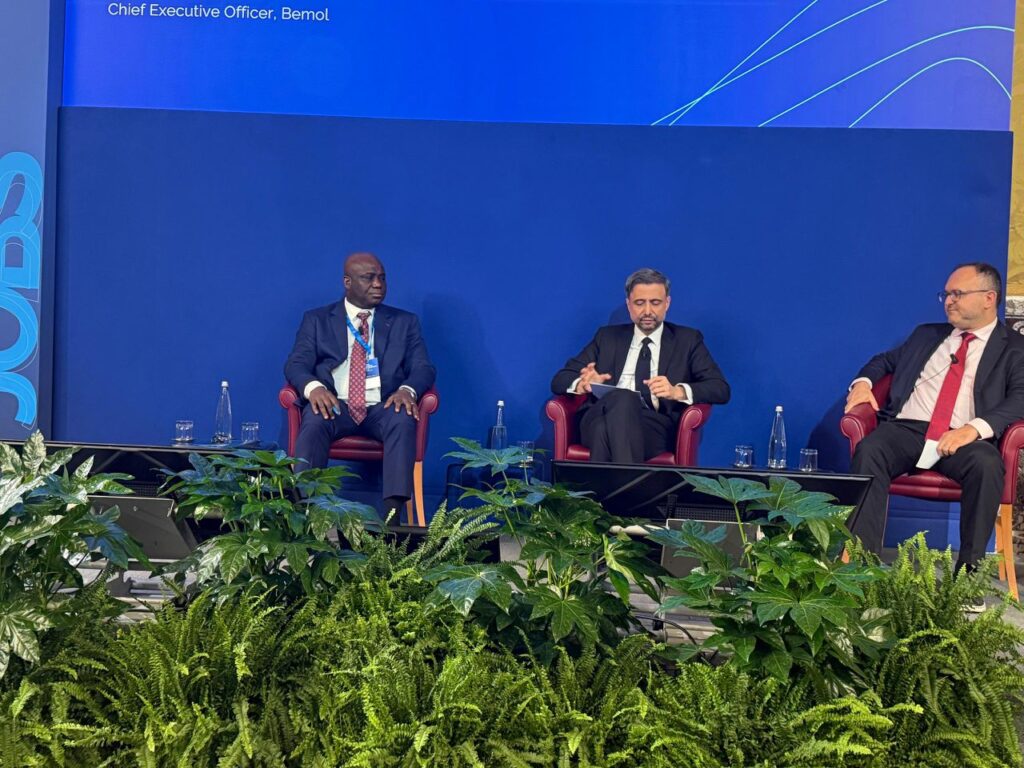
The Minister for Food and Agriculture, Eric Opoku, has participated in a high-level global policy dialogue on job creation in Africa held in Rome.
The forum, organised under the Mattei Plan for Africa in collaboration with the World Bank Group and Banca d’Italia, was held under the theme “Laying the Groundwork for Jobs in Africa: Core Infrastructure & Business Environment.
The summit brought together global leaders, policymakers and development partners to discuss strategies aimed at accelerating economic growth and creating sustainable employment opportunities across the African continent.
Among the distinguished participants were the President of the World Bank Group, the Chief Executive Officer of Banca d’Italia, the President of Singapore, the Prime Minister of Italy, Chief Executive Officer of Bemol Denis Minev, and the President of the International Fund for Agricultural Development, Alvaro Lario.
Speaking during a panel discussion, Mr. Opoku highlighted the central role agriculture plays in Ghana’s economy and the government’s commitment to transforming the sector into a major driver of employment and industrial growth.
He noted that agriculture contributes nearly 30 percent of Ghana’s Gross Domestic Product and employs about 24 percent of the country’s workforce, with the majority of rural households engaged in farming activities.
However, he explained that the sector has for many years operated largely as a low-productivity, informal and smallholder-dominated activity, which has limited its ability to generate sustainable jobs for the country’s growing youth population.
According to the Minister, Ghana records about 160,000 young people entering the labour market each year, making it crucial for the country to modernize its agricultural sector to create more employment opportunities.
“To generate sustained and productive jobs, we must transition from the traditional smallholder model to one that integrates large-scale production, value addition and agribusiness development,” he stated.
Mr. Opoku said the Government of Ghana has therefore launched the Agriculture for Economic Transformation Agenda, a comprehensive policy framework designed to modernize agriculture and support industrialization.
He explained that the agenda is being implemented through the Feed Ghana Programme, which aims to increase food production to meet domestic demand while also supplying raw materials to agro-processing industries.
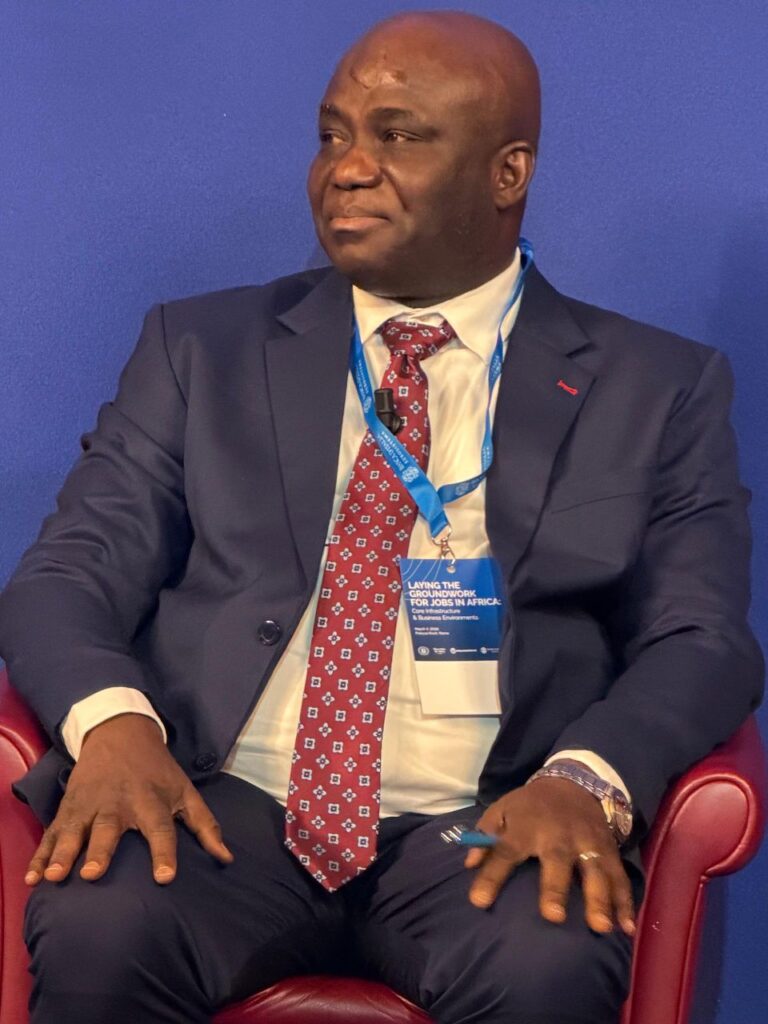
The programme is also expected to complement Ghana’s proposed 24-Hour Economy Policy, which he said would expand industrial activity and processing capacity, thereby creating a steady demand for agricultural raw materials.
“Our strategy is simple,” he noted. “When farmers have access to inputs, markets and infrastructure, they invest more in production because every rational producer produces in anticipation of the market.”
The Minister further stressed that Ghana is intentionally shifting from farming as a livelihood activity to farming as a business and agribusiness enterprise while strengthening the link between agriculture and industry.
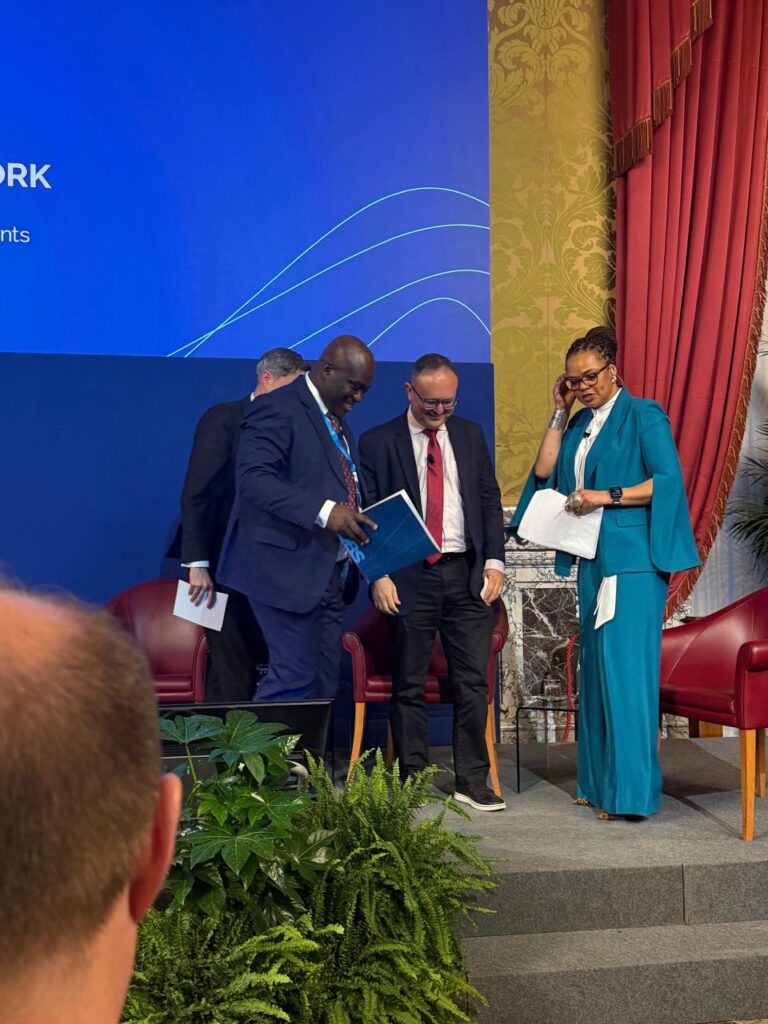
He outlined several strategic interventions being implemented to support agricultural transformation, including the expansion of irrigation and water management systems to enable year-round farming rather than relying solely on rainfall.
The government is also investing in agricultural roads, with plans to construct 1,000 kilometres of farm roads to improve access to markets, reduce transportation costs and minimise post-harvest losses.
Another key intervention, he said, is strengthening national food storage systems through the National Food Buffer Stock Company, which purchases excess produce from farmers during peak harvest seasons and releases the stock during periods of scarcity.
Additionally, the government is establishing Farmer Service Centres across agricultural districts to provide farmers with access to mechanisation services such as tractors, combine harvesters and other essential equipment.
Mr. Opoku also emphasised the importance of financing in accelerating agricultural transformation.
“When finance is available, farmers are more willing to invest in technology and processes, upgrade their equipment and improve productivity. As this happens, jobs will grow, capital will flow and stronger institutions will emerge,” he said.
He concluded by stressing that transforming food systems requires a multi-sectoral approach involving investments in infrastructure, energy, agriculture and industrial development.
“There is common ground, but there is no single solution. Food systems are complex and require coordinated action across many sectors to address the challenges and unlock opportunities,” he added.
The Rome summit forms part of broader international efforts to mobilize investment and partnerships aimed at promoting sustainable development and job creation across Africa.