


by Emmanuel Sowah
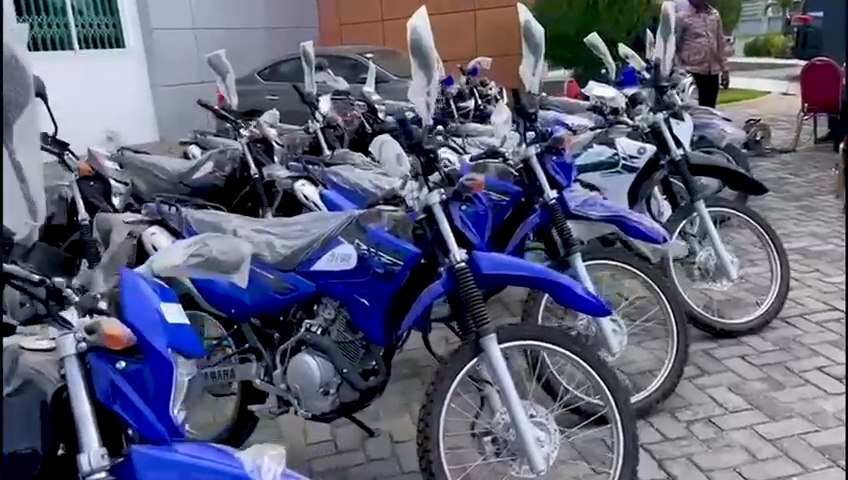
The Ministry of Food and Agriculture, under the leadership of Minister Eric Opoku, has handed over 150 motorcycles to agricultural extension officers as part of efforts to strengthen field operations and improve agricultural productivity.
This initiative is aimed at enhancing the mobility and effectiveness of extension officers, who play a vital role in educating farmers on modern agricultural practices. Minister Opoku noted that although extension officers are a critical component of the farming support system, they have long operated with limited resources, hindering their ability to reach many farmers in rural communities.

The current ratio of one extension officer to approximately 1,500 farmers significantly exceeds the recommended ratio of one officer to 500 farmers. This gap has made it nearly impossible for extension officers to effectively support all farmers during peak farming seasons. The provision of motorcycles is expected to ease these challenges by enabling officers to reach more farmers, particularly those in hard-to-access communities.
In addition to the 150 motorcycles distributed, the Ministry plans to recruit 300 new extension officers next month, each of whom will also be equipped with motorcycles to further improve service delivery. This move is part of a broader strategy to strengthen the agricultural workforce and support the ongoing “Feed Ghana” program.
To further boost the capacity of the extension system, the Ministry is collaborating with the National Service Scheme to recruit 5,000 agricultural college graduates. These graduates will be placed under the scheme, with a plan to transition them onto the government payroll over a four-year period.
Out of the 150 motorcycles handed over, 30 have been specifically allocated to female extension officers, reflecting the Ministry’s commitment to gender inclusion in agricultural development. Additionally, Feed Ghana Coordinators across the regions will also receive motorcycles to support their field operations under the supervision of district agricultural directors.
This latest intervention forms part of the Ministry’s broader commitment to transforming agriculture in Ghana by equipping frontline officers with the tools they need to effectively support farmers and promote food security.
