

The Acting President of the Sefwi Wiawso Traditional Area, Nana Ofori Ahenkan II, has called on government to undertake a comprehensive review of Ghana’s decentralisation system, describing the current structure as ineffective and counterproductive to service delivery.
According to him, the existing decentralised framework is failing to ensure proper coordination and efficient governance across regions, thereby undermining development efforts.
Nana Ofori Ahenkan II made the remarks on 27th of March 2026, when a delegation from the National Development Planning Commission (NDPC), led by its Chairman, Dr. Nii Moi Thompson, and Director-General, Dr. Audrey Smock Amoah, paid a courtesy call to him.
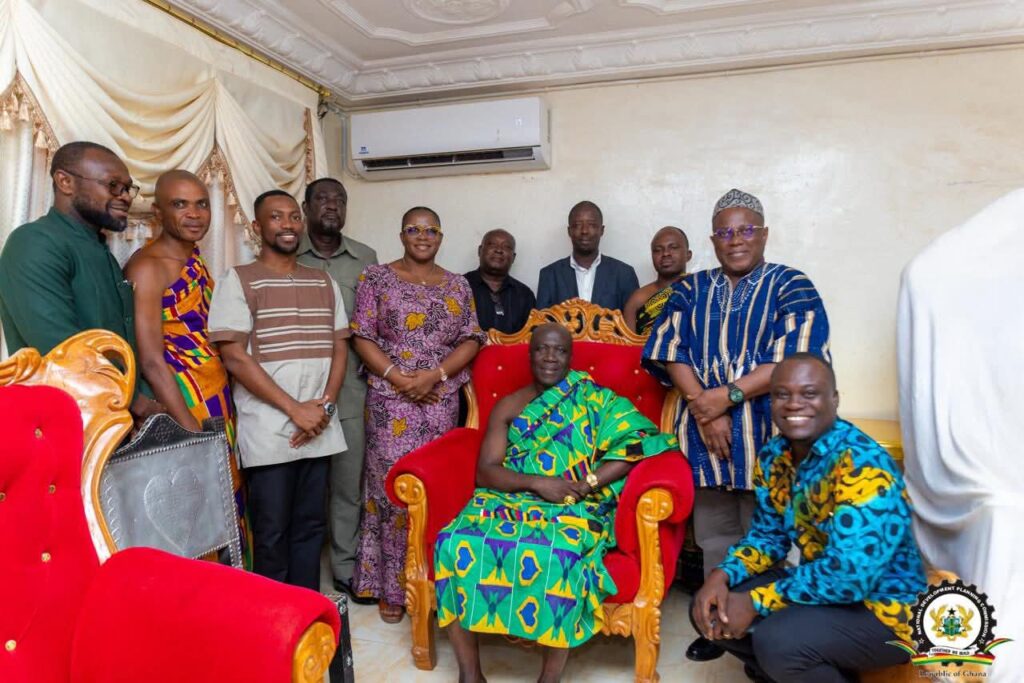
Nana Ofori Ahenkah explained that the challenge goes beyond the role of regional capitals and instead affects the broader functionality of Ghana’s tiered governance system. He noted that although regional capitals are expected to host higher-level institutions and services, the dispersal of decentralised agencies across multiple districts within the same region is weakening coordination.
“In my personal view, the decentralisation of various agencies within the regions is becoming a challenge rather than a solution,” he stated.
He therefore advocated a more balanced and efficient governance structure that maintains grassroots participation while strengthening oversight and coordination at the regional level.
“We need a system that works for the people—one that ensures efficiency, accountability, and real development outcomes,” he emphasised.

Nana Ofori Ahenkan II further warned that fragmented governance structures are impeding the development potential of the region. He highlighted critical priorities including the establishment of a regional hospital, the creation of a university, improvement of road infrastructure, and the expansion of agribusiness particularly oil palm cultivation.
He cautioned that without improved coordination, such initiatives risk delays, duplication, and inefficiencies.

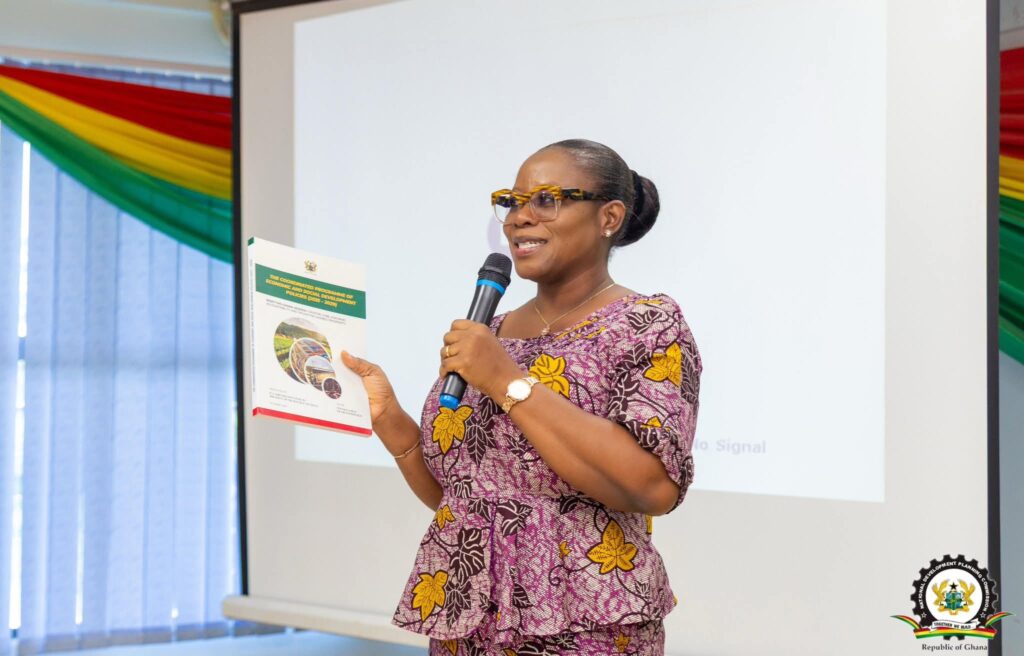
The Director-General of the NDPC, Dr. Audrey Smock Amoah, echoed similar concerns during the engagement, stressing the need for strong institutional alignment in planning and implementation.
She noted that effective development planning depends on collaboration across districts and regions to ensure policies translate into measurable outcomes.
We must ensure that our planning processes are well coordinated and results-oriented,” she said, adding that fragmented systems can significantly slow implementation and diminish the impact of development programmes.