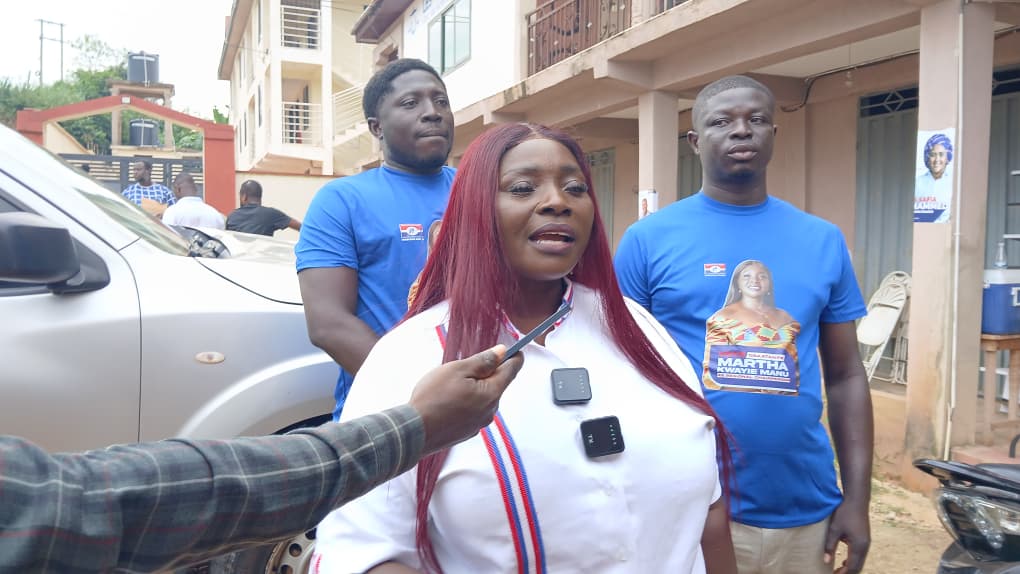



Martha Kwayie Manu is seeking to make history as the first woman to lead the New Patriotic Party (NPP) in the Western North Region if elected as Regional Chairperson.
Since the creation of the Western North Region, the NPP has been led by two male Regional Chairpersons. However, this could change as Martha Kwayie Manu has joined the Regional Chairmanship race, becoming the first woman to contest the position. She is competing against three male candidates.
If elected, Martha, would become the first female Regional Chairperson of the NPP in the Western North Region, marking a significant milestone in the party’s political history in the region.
Campaign Focus on Unity
As part of her campaign, Martha Kwayie Manu has positioned herself as a unifier who can bring the various factions within the party together.
She has acknowledged divisions within the NPP in the region, arguing that the internal disagreements contributed to the party’s poor electoral performance and the loss of all its parliamentary seats in the region.
She has pledged to restore unity within the party and work towards reclaiming the seats lost by the NPP.
I will restore unity to reclaim all our seats, she said.
Martha Kwayie Manu’s Political Journey
Martha Kwayie Manu has had a long political career within the NPP and has played a role in the political development of the Western North Region.
She became the first female parliamentary candidate of the NPP in the Juaboso Constituency, serving as the party’s parliamentary candidate from 2012 to 2020.
She later became the first female District Chief Executive (DCE) for the Juaboso District from 2017 to 2021
From 2021 to 2025, she also served as Deputy Chief Executive Officer of the Forestry Commission of Ghana.
With her political experience at the constituency, district and national levels, Martha Kwayie Manu has now entered the race for the NPP Western North Regional Chairmanship, seeking to break another political barrier by becoming the first woman to occupy the position.
Her candidacy has therefore placed gender representation, party unity and the NPP’s strategy for regaining its lost parliamentary seats at the centre of the regional chairmanship contest.