


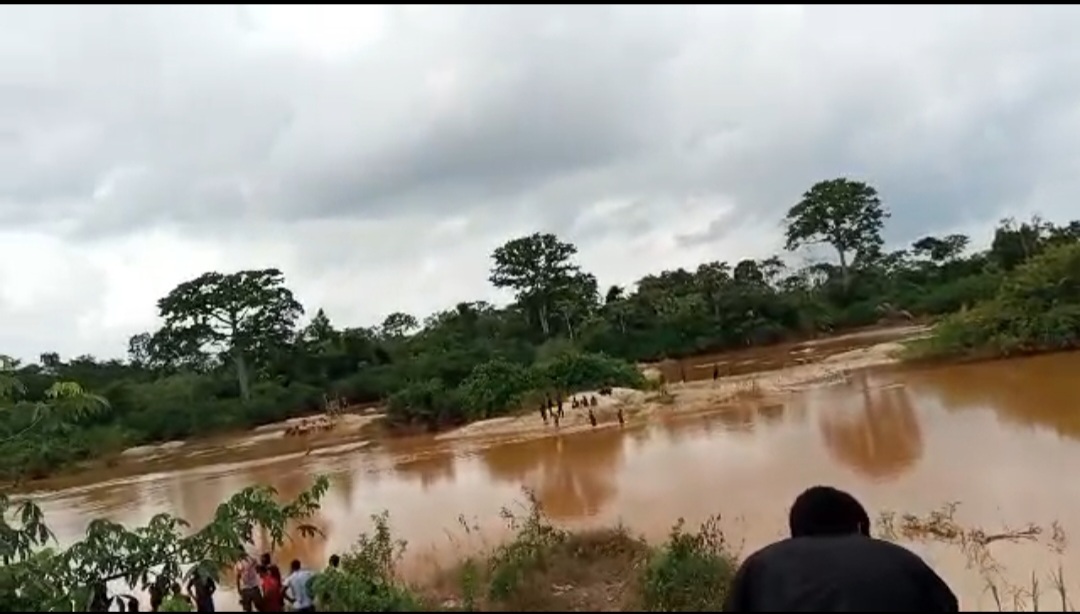

The fight against illegal mining, popularly known as galamsey, requires the collective efforts of state institutions, security agencies, traditional authorities, civil society organisations, the media and the general public.
Journalists, in particular, have an important role to play. Through investigative reporting, public education and responsible journalism, the media can expose illegal mining activities, highlight the destruction of water bodies and farmlands, and demand accountability from authorities.
But what happens when journalists themselves are accused of exploiting illegal miners for money?
That is the difficult question facing the media fraternity in the Western North Region.
In November 2025, Legendreport published a cover story alleging that some journalists in the Western North Region were visiting mining sites, filming mining operations and subsequently demanding money from miners under the threat of exposing their activities.
According to the allegations contained in the publication, some of the journalists were demanding amounts ranging from GH¢3,000 to GH¢10,000 from miners. Areas mentioned included Abrokofe, Kwawkrom, Boinzan and Mafia in the Juaboso District, Kwasuo in the Suaman District, and parts of the Bodi District.
The publication generated significant discussion within the media fraternity across the region.
The Western North Journalists Association subsequently issued a statement distancing the association from the allegations. The association also called on the relevant authorities to investigate the claims and take appropriate action against anyone found to have engaged in such unprofessional conduct.
Ten months later, however, there has been no publicly known report from the relevant authorities on the outcome of any investigation into the allegations.
That raises an important question: Were the allegations investigated, and if so, what was the outcome?
A Fresh Allegation
On August 24, 2026, Legendreport received another allegation involving journalists and suspected extortion at a mining site in the Bodi District of the Western North Region.
According to the information available to Legendreport, a group of about six journalists allegedly travelled to the site in a private vehicle.
It is alleged that the owner of the mining operation was not present when the journalists arrived. They reportedly obtained his telephone number and contacted him, allegedly demanding money.
The allegation further claims that the journalists warned the miner that failure to comply would result in them returning to the site within one week to remove his mining equipment.
These allegations, if established through an independent investigation, would raise serious questions about the conduct of the individuals involved and the extent of their authority.
Who Gave Journalists the Authority?
This development leads to several fundamental questions.
Do journalists have the legal authority to enter a mining site and threaten to seize mining equipment?
If journalists believe that illegal mining is taking place, should they not report the matter to the appropriate law-enforcement or regulatory authorities?
Do they have any official mandate from the regional administration or another state institution to remove mining equipment?
Do they have any backing from the security agencies involved in operations against illegal mining?
And, if they have no such authority, under what circumstances can journalists threaten a miner with the removal of equipment?
These questions require answers—not only for the protection of the media’s credibility, but also for the integrity of the fight against illegal mining.
Journalists are not security officers. They are not judges, prosecutors or regulatory agencies.
Where evidence of illegal mining is obtained, the responsibility of journalists should ordinarily be to document, verify and report the matter responsibly, while referring actionable evidence to the appropriate authorities.
The Bigger Threat to Journalism
The danger goes beyond allegations involving a few individuals.
Journalism depends fundamentally on public trust.
When journalists are perceived as using their professional identity, cameras or media platforms to intimidate people for personal financial gain, the consequences can affect the entire profession.
A journalist who threatens to publish information unless money is paid is no longer simply performing a watchdog function. Such conduct, if proven, could raise serious ethical and professional concerns.
The media fraternity in the Western North Region must therefore take these allegations seriously.
This is not an attack on journalists as a profession. It is a call for accountability within the profession.
Journalists are the voice of the voiceless and an important pillar of democratic accountability. But that responsibility comes with a duty to maintain credibility, independence, fairness and integrity.
A Call to the Western North Journalists Association
The Western North Journalists Association has already demonstrated its willingness to respond to allegations that could affect the reputation of journalists in the region.
The latest allegation presents another opportunity for the association to act.
The association should encourage an independent and transparent investigation into the claims, particularly where specific individuals, locations and alleged actions have been identified.
If the allegations are false, those affected deserve an opportunity to clear their names.
If they are proven to be true, appropriate professional and legal action should follow.
Silence will not protect the profession.
The credibility of journalism cannot be defended simply by denying allegations. It must be protected through transparency, accountability and professional conduct.
Security Agencies Must Also Answer
The security agencies and relevant state institutions must clarify whether any journalists or media groups have been authorised to conduct operations at mining sites or remove mining equipment.
If no such authority exists, that fact should be made clear.
If journalists are being used to support official operations, the public also deserves to know under what legal framework such cooperation is taking place.
The fight against galamsey is too important to be compromised by individuals who may seek to exploit the situation for personal benefit.
The Question for Western North
The central question is therefore not whether journalists should report illegal mining.
They absolutely should.
The question is whether journalists can remain credible watchdogs if some of them are accused of turning their cameras and professional identities into instruments for financial demands.
The media must not become part of the problem it is supposed to expose.
If illegal mining is destroying rivers, forests and farmlands, journalists should expose it.
If officials are failing to act, journalists should hold them accountable.
But if journalists themselves are accused of misconduct, the same principle of accountability must apply.
The Western North Region needs a strong, independent and credible media.
That credibility is a collective asset.
Once it is lost, restoring public trust becomes extremely difficult.
The allegations contained in this article should therefore not be treated as a declaration of guilt against any journalist. They are allegations that require proper investigation, verification and due process.
But they should also not be ignored.
